
Mould Sand Preparation
Fresh sand is mixed with Mennonite and other additives in a mixer to make green sand. CO₂ moulds use fresh dry sand with sodium silicate and CO₂ gas. No-Bake moulds use fresh dry sand with resin and hardener.
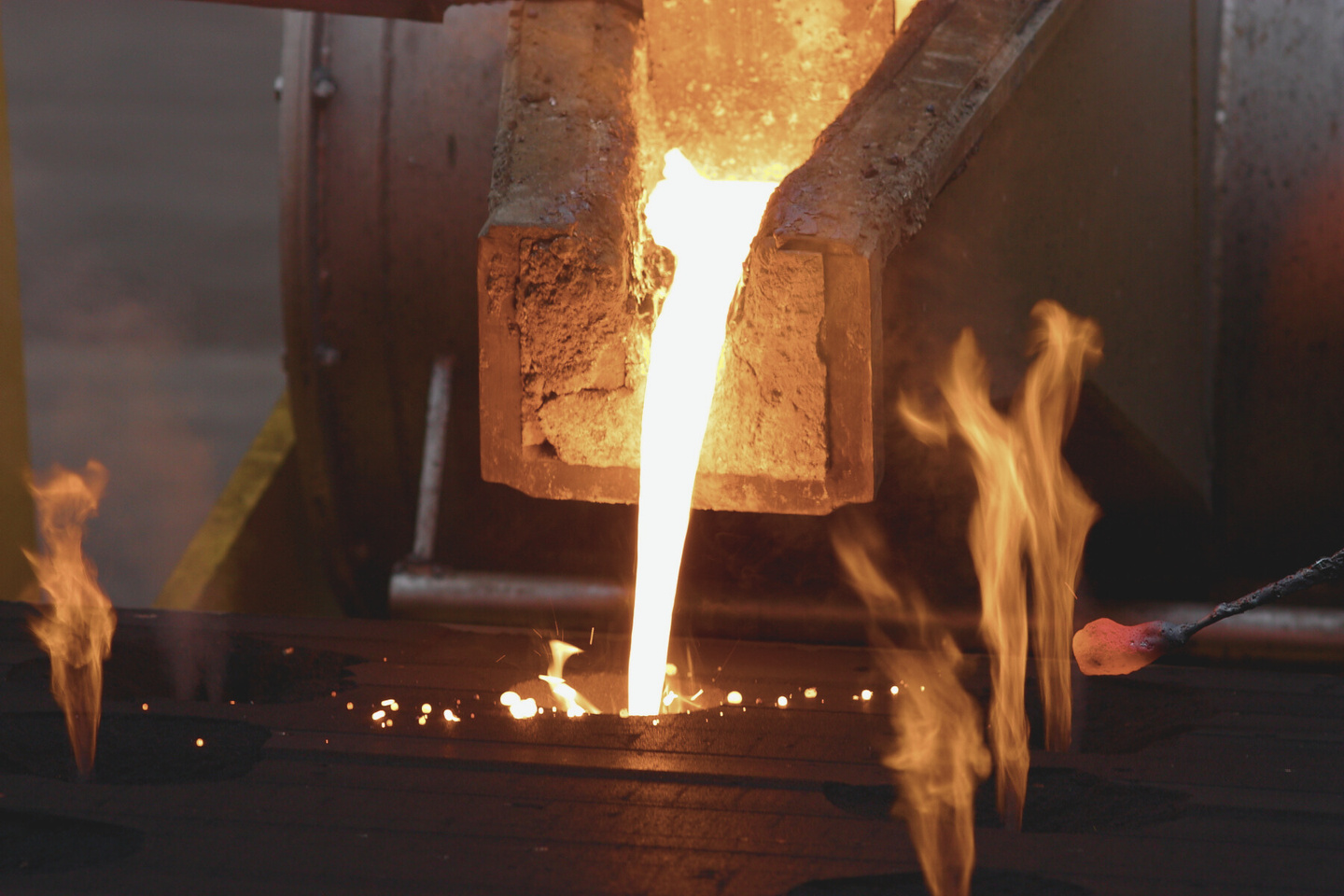
The brochure describes the major steps of mould sand preparation, charging, melting, pouring, knockout, finishing, inspection and despatch.
Fresh sand is mixed with Mennonite and other additives in a mixer to make green sand. CO₂ moulds use fresh dry sand with sodium silicate and CO₂ gas. No-Bake moulds use fresh dry sand with resin and hardener.
Moulding sand is pressed by machines or manually on the pattern to prepare the mould.
Pig iron, scrap, foundry returns and other alloys are weighed and charged into the furnace.
The metal charge is melted in an induction furnace.
Molten metal is transferred and poured into moulds using ladles operated manually or with cranes.
After cooling, castings are removed from the mould manually or using a machine.
Runners and risers are removed, followed by shot blasting and cleaning.
Quality checks are carried out as per the quality plan for the casting.
The required quantity is dispatched with documents such as invoice and inspection reports.